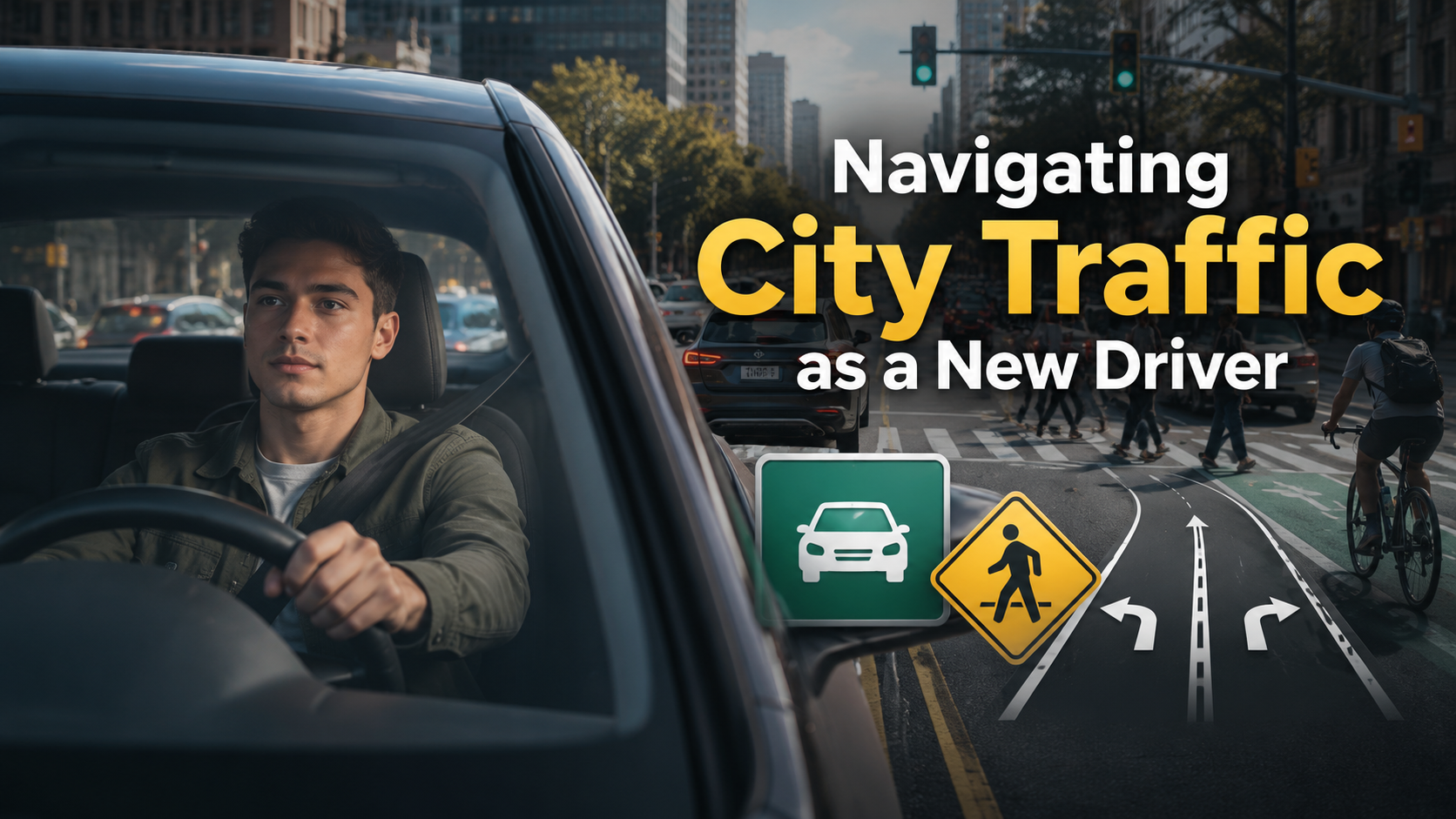
Navigating City Traffic as a New Driver
Driving in a busy city can feel overwhelming when you are still gaining experience behind the wheel. Traffic lights, pedestrians, cyclists, parked vehicles, buses, and frequent lane changes can all demand your attention at the same time.
The goal is not to react to everything at once. It is to slow down, look ahead, and give yourself enough time and space to make safe decisions.
Look Farther Ahead
Avoid focusing only on the vehicle directly in front of you. Look farther down the road so you can identify changing traffic lights, stopped buses, construction zones, pedestrians, and vehicles entering or leaving parking spaces.
Looking ahead gives you more time to respond smoothly instead of braking or changing lanes suddenly.
Leave Extra Following Distance
City traffic often stops without much warning. Leave enough room between your vehicle and the one ahead so you can stop safely.
Increase that distance when:
- Traffic is heavy
- Roads are wet, snowy, or icy
- Visibility is limited
- You are following a bus, truck, or other large vehicle
- Drivers around you are behaving unpredictably
Extra space also helps you see around the vehicle ahead.
Prepare for Intersections Early
Intersections are some of the busiest areas in city driving. As you approach one, reduce distractions and begin checking for:
- Traffic lights and signs
- Pedestrians entering crosswalks
- Vehicles turning across your path
- Cyclists approaching from either direction
- Emergency vehicles
- Cars that may run a red light or stop sign
Even when you have the right of way, confirm that the intersection is clear before proceeding.
Watch Carefully for Pedestrians
Pedestrians may appear between parked cars or enter a crosswalk unexpectedly. Reduce your speed in areas with heavy foot traffic, including downtown streets, school zones, shopping districts, and residential neighborhoods.
Never pass a vehicle that has stopped at a crosswalk. It may be allowing someone to cross where you cannot see them.
Share the Road with Cyclists
Cyclists may travel in the roadway or in a marked bicycle lane. Check your mirrors and blind spots before turning, changing lanes, or opening a vehicle door.
When passing a cyclist, provide plenty of space and follow your state’s passing-distance requirements. Avoid moving back into the lane until you are safely beyond the cyclist.
Plan Lane Changes in Advance
Last-minute lane changes create unnecessary risk. Watch signs and navigation directions early so you know which lane you will need.
Before changing lanes:
- Check your mirrors.
- Activate your turn signal.
- Check your blind spot.
- Confirm there is enough space.
- Move gradually into the lane.
- Turn off your signal if it does not cancel automatically.
Missing a turn is safer than cutting across traffic. Continue driving and allow your navigation system to find another route.
Be Careful Around Parked Vehicles
A parked vehicle can begin moving, open a door, or block your view of a pedestrian. Watch for brake lights, turn signals, exhaust, moving wheels, and people sitting inside parked vehicles.
Leave additional room when passing parked cars whenever traffic conditions allow.
Avoid Blocking Intersections
Do not enter an intersection unless there is enough room for your entire vehicle on the other side. A green light does not mean you should proceed when traffic ahead is stopped.
Blocking an intersection can interfere with pedestrians, cross traffic, and emergency vehicles.
Minimize Distractions
City driving requires frequent decisions, so distractions are especially dangerous. Set your destination, adjust your mirrors, and choose your music before moving.
Keep your phone out of reach and avoid eating, searching for items, or adjusting controls while driving.
Stay Calm When Other Drivers Are Impatient
You may encounter drivers who follow too closely, honk, or attempt aggressive lane changes. Do not let their behavior pressure you into speeding or making an unsafe decision.
Maintain a predictable speed, avoid eye contact or gestures, and allow aggressive drivers to pass when it is safe.
Practice During Quieter Times
Confidence develops through gradual practice. Begin driving in the city during times with lighter traffic before attempting rush hour or unfamiliar downtown areas.
Practice with an experienced adult or instructor and focus on one skill at a time, such as:
- Navigating intersections
- Changing lanes
- Driving near parked vehicles
- Watching for pedestrians
- Following navigation directions
- Entering and leaving one-way streets
Take Your Time
Successful city driving is not about rushing. It is about remaining aware, communicating your intentions, and making predictable decisions.
Slow down when conditions become complicated, maintain space around your vehicle, and never allow another driver to pressure you into taking an unnecessary risk.